

Dubai 2040 Urban Master Plan: The Blueprint for Dubai’s Future Smart City
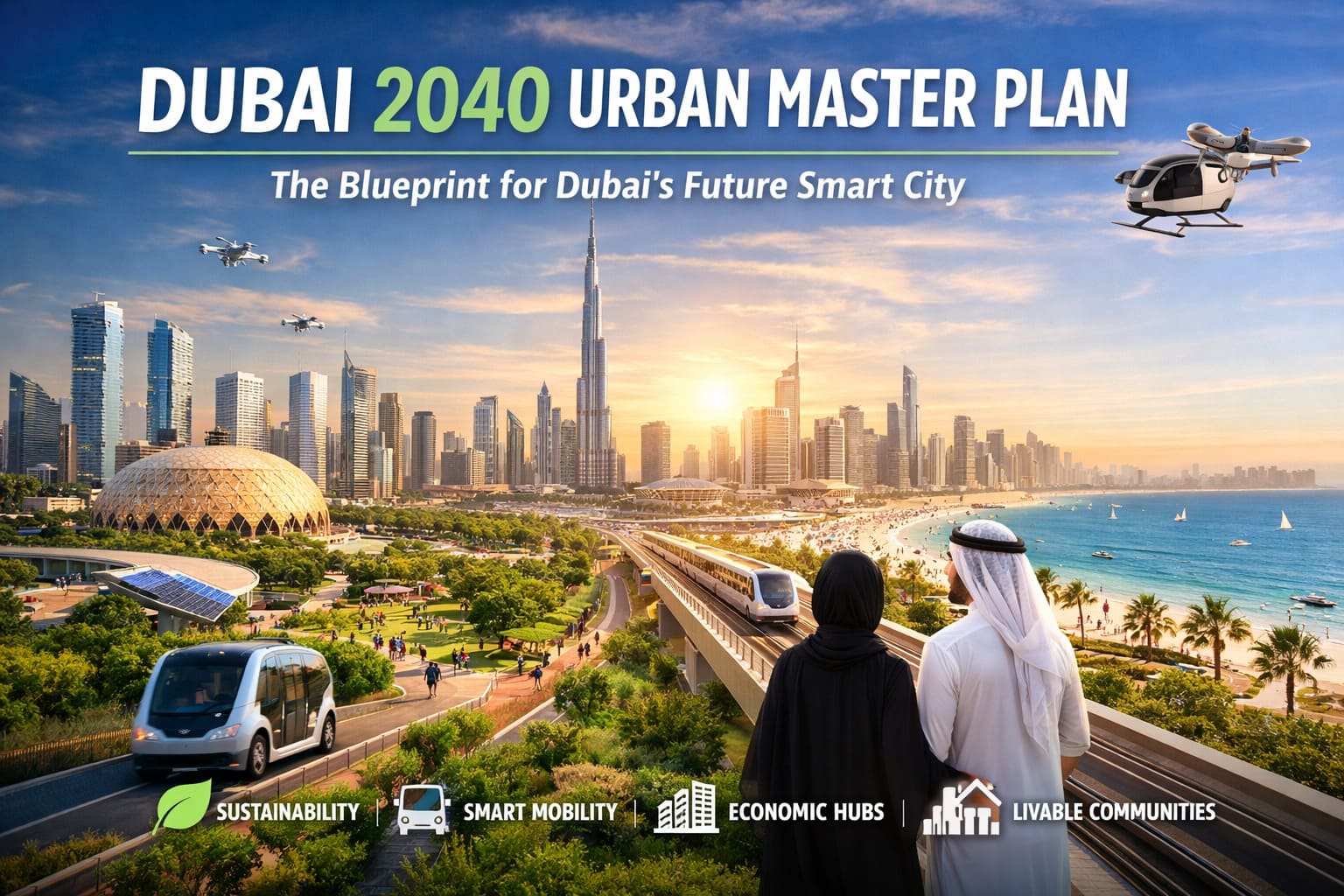
How Dubai Is Planning the Next Era of Urban Growth
Over the past five decades, Dubai has transformed from a modest trading port into one of the world’s most dynamic global cities. Today, the emirate stands as a leading hub for tourism, finance, innovation, and international investment.
Looking ahead, the Dubai 2040 Urban Master Plan represents the city’s next major milestone. Designed as a long-term roadmap for the next twenty years, the plan focuses on sustainable urban expansion, improved quality of life, and smart infrastructure development.
With Dubai’s population expected to reach approximately 5.8 million residents by 2040, the master plan ensures that growth will be carefully managed. Rather than allowing expansion to overwhelm the city, Dubai aims to create a balanced urban environment where economic growth, sustainability, and community well-being coexist.
The Dubai 2040 plan is not simply about building more towers or expanding infrastructure. It represents a strategic vision to build a future-ready city that prioritizes people, connectivity, and environmental sustainability.
Why the Dubai 2040 Urban Master Plan Matters Globally
Cities around the world are facing increasing pressure from rapid urbanization, climate change, and infrastructure demands. Governments must rethink how cities grow in order to maintain livability and economic stability.
Dubai’s approach stands out because it combines visionary leadership, long-term planning, and advanced urban design principles.
The master plan aims to transform Dubai into a city where:
-
Sustainable infrastructure supports economic growth
-
Public transportation reduces traffic congestion
-
Communities become more walkable and connected
-
Green spaces expand significantly
-
Innovation and technology drive future development
By implementing these strategies, Dubai is positioning itself as a global model for future urban development.
For emerging megacities across the world, Dubai’s approach demonstrates how strategic planning, sustainability, and smart technology can reshape urban life.
The Vision Behind Dubai 2040
The Dubai 2040 Urban Master Plan was announced by Sheikh Mohammed bin Rashid Al Maktoum, reflecting a long-term commitment to creating a city built for future generations.
The plan focuses on creating an urban environment where:
-
Communities are more connected and accessible
-
Public spaces encourage social interaction
-
Sustainable development protects natural ecosystems
-
Innovation and knowledge-based industries drive economic diversification
At its core, the vision aims to ensure that quality of life becomes the foundation of urban development.
Instead of simply expanding the skyline, Dubai is focusing on creating livable, balanced communities where residents can work, live, and relax within integrated urban districts.
Why Dubai Chose the 2040 Timeline
Dubai’s rapid population growth and economic expansion required a long-term development framework.
By planning two decades ahead, the emirate can coordinate:
-
Housing supply
-
Infrastructure investment
-
Environmental protection
-
Economic diversification
The timeline also aligns with the UAE’s long-term national development strategy, including the UAE Centennial 2071, which focuses on building a knowledge-based economy and sustainable future.
Core Objectives of the Dubai 2040 Urban Master Plan
1. Improving Quality of Life
One of the most important goals of the master plan is enhancing the overall lifestyle of residents and visitors.
Key initiatives include:
-
Doubling green and recreational areas
-
Expanding beaches and waterfront access
-
Increasing pedestrian-friendly zones
-
Creating more parks and leisure destinations
The plan aims to ensure that urban living in Dubai becomes healthier, more accessible, and more community-focused.
2. Sustainable Urban Expansion
Environmental sustainability sits at the center of the development strategy.
The plan proposes:
-
Allocating 60% of Dubai’s total area to nature reserves and rural ecosystems
-
Promoting energy-efficient buildings
-
Integrating renewable energy solutions
-
Encouraging environmentally responsible urban development
This approach helps balance economic growth with environmental responsibility.
3. Transit-Oriented Development
Transportation infrastructure plays a major role in the Dubai 2040 vision.
The city plans to expand:
-
Metro lines
-
Bus networks
-
Tram routes
-
Cycling paths
-
Pedestrian corridors
Communities will increasingly be built around public transportation hubs, reducing reliance on cars and creating more connected neighborhoods.
4. Strengthening Economic Hubs
Dubai’s future economic growth will focus on developing knowledge-based industries and innovation sectors.
The master plan supports:
-
Technology zones
-
innovation districts
-
global business centers
-
entrepreneurship ecosystems
These initiatives will help Dubai attract global talent while strengthening its position as a major international business hub.
Five Key Urban Centers Shaping Dubai’s Future
To prevent overcrowding in a single central district, Dubai is developing a polycentric city model, distributing economic activity across multiple urban centers.
1. Expo City Dubai
Formerly known as the Expo 2020 Dubai site, Expo City Dubai is now evolving into a global hub for sustainability, research, and innovation.
This district will focus on:
-
smart infrastructure
-
green architecture
-
startup ecosystems
-
research institutions
2. Downtown Dubai and Business Bay
Home to iconic landmarks such as the Burj Khalifa, this district will continue to function as Dubai’s financial and tourism powerhouse.
Future developments will prioritize:
-
walkability
-
mixed-use developments
-
improved public transportation connectivity
3. Historic Dubai: Deira and Bur Dubai
The historic districts around Dubai Creek represent the cultural and commercial roots of the city.
Urban revitalization projects will focus on:
-
heritage tourism
-
pedestrian streets
-
preservation of traditional markets
-
support for local businesses
4. Dubai Marina and JBR
Dubai’s coastal lifestyle hub combines residential living, retail promenades, and beachfront leisure.
Future development will enhance:
-
tram connectivity
-
waterfront walkways
-
public beach access
5. Dubai Silicon Oasis
This technology-focused district supports startups, research institutions, and innovation companies.
Designed as a live-work community, it integrates residential areas with technology campuses and educational facilities.
The 20-Minute City Concept
A major component of the Dubai 2040 vision is the “20-minute city” concept.
This idea ensures residents can access essential services within a short distance from their homes, including:
-
workplaces
-
schools
-
healthcare facilities
-
shopping centers
-
parks
-
public transport stations
By shortening commute times and improving accessibility, Dubai aims to create more efficient and community-centered neighborhoods.
Infrastructure and Smart Mobility for the Future
Dubai’s future transportation system will rely on smart technology and integrated infrastructure.
Key innovations include:
-
AI-driven traffic management systems
-
real-time mobility data platforms
-
autonomous transport solutions
-
expanded metro and tram networks
This integrated digital infrastructure will help the city operate more efficiently while improving the daily experience of residents.
Real Estate Opportunities Under Dubai 2040
For investors and developers, the Dubai 2040 Urban Master Plan opens significant opportunities.
The plan encourages the development of mixed-use communities, where residential, commercial, retail, and leisure spaces exist within the same district.
Major trends shaping the market include:
-
sustainable building design
-
infrastructure-led property development
-
expansion into new growth corridors
-
smart community planning
These trends create long-term investment potential as Dubai’s population and economy continue to expand.
Challenges Facing the Dubai 2040 Vision
While the master plan is ambitious, implementing such a large-scale strategy comes with challenges.
Infrastructure Funding
Developing large transportation networks and urban infrastructure requires sustained investment and strong public-private partnerships.
Responsible Urban Expansion
Balancing rapid growth with housing affordability and sustainable development will be crucial.
Resource Management
Dubai’s desert climate creates pressure on water and energy resources, making efficient infrastructure and renewable energy solutions essential.
Climate Resilience
Future urban planning must address challenges such as rising temperatures, sandstorms, and coastal protection.
What Dubai 2040 Means for the World
Dubai’s 2040 vision demonstrates how cities can adapt to the future by combining sustainability, technology, and strategic planning.
Rather than reacting to urban growth, Dubai is actively shaping it.
For cities around the world facing similar challenges, Dubai offers a powerful lesson: long-term planning, innovation, and human-centered design are essential to building the cities of tomorrow.
Conclusion: Dubai’s Road to a Smarter Future
The Dubai 2040 Urban Master Plan represents one of the most ambitious urban development strategies in the world.
By expanding green spaces, improving transportation infrastructure, strengthening economic hubs, and building more connected communities, Dubai is preparing for a future that prioritizes both growth and quality of life.
As the city continues evolving, the 2040 vision ensures that Dubai remains a global leader in urban innovation, sustainability, and economic opportunity.