

Dubai Is Connecting the Entire City — Without Cars
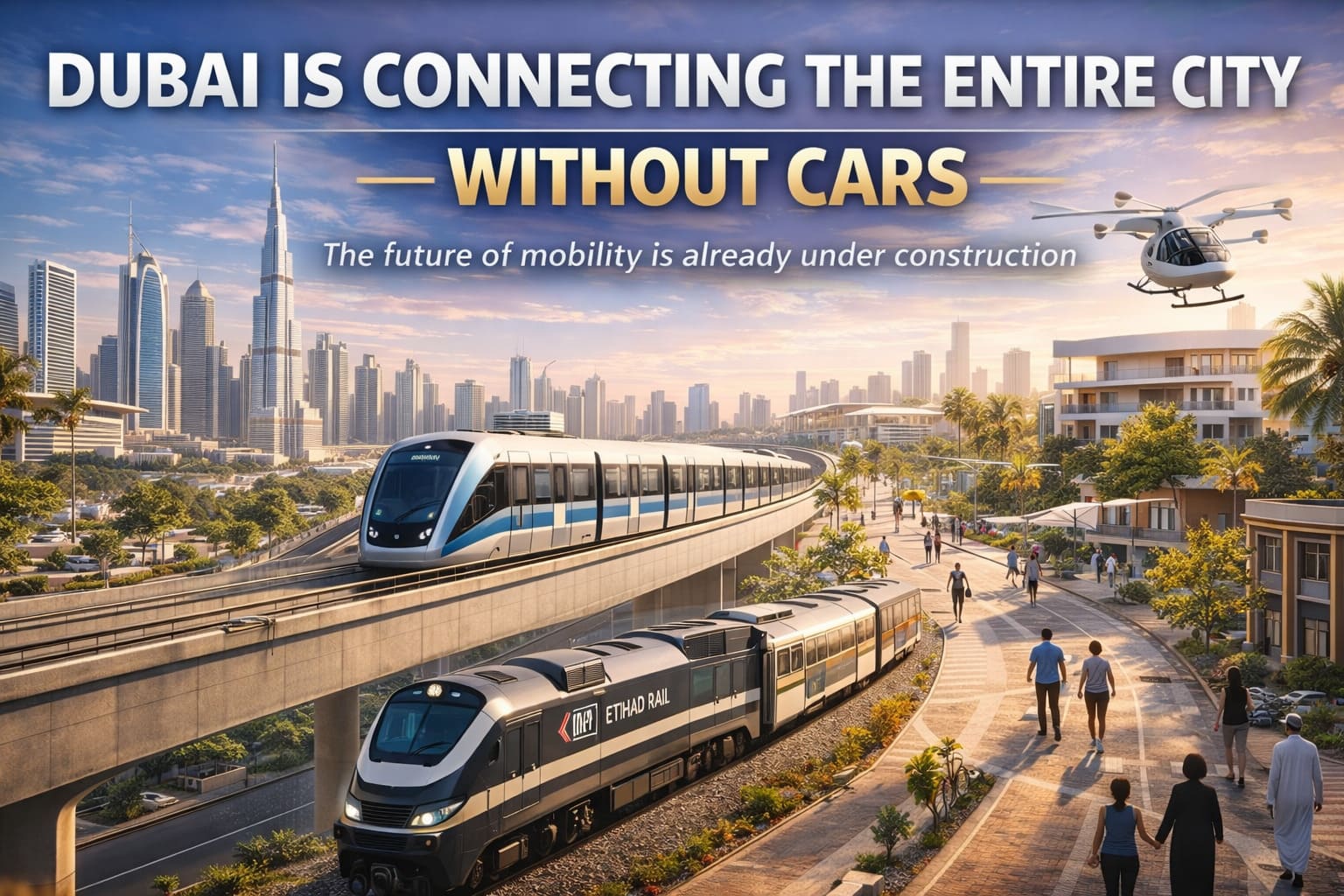
Dubai is quietly building one of the most ambitious urban mobility ecosystems in the world — a city designed to move without relying on private cars.
From metro expansions and trackless trams to nationwide rail and flying taxis, Dubai’s transport strategy is not about one solution — it’s about layered mobility working together.
The future of transport in Dubai isn’t theoretical.
It’s already under construction.
Dubai Metro Is Expanding at Speed
Dubai’s metro network continues to grow as the backbone of daily urban movement.
Key developments include:
-
New lines and major extensions
-
Direct connections to key residential and business communities
-
Faster, cleaner, and more reliable commutes
This expansion reduces road congestion while increasing accessibility across the city.
The goal is simple:
Less traffic. More efficiency.
A city designed to move smoothly.
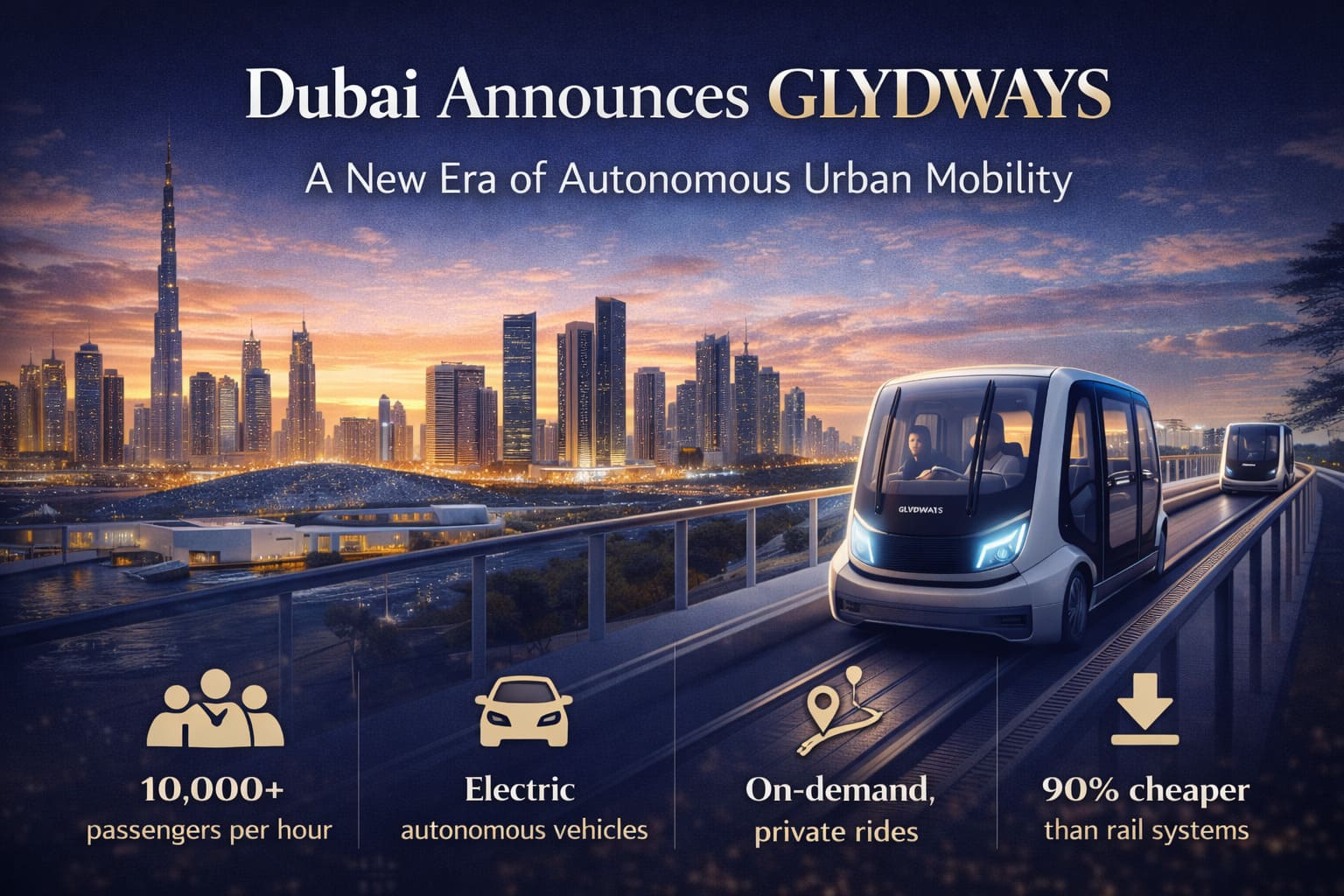
Trackless Trams: The Next Generation of Urban Transit
Dubai is also introducing trackless trams, a new class of public transport that blends flexibility with sustainability.
What makes them different:
-
No rails required
-
AI-guided routes
-
Fully electric and zero-emission
-
Deployed without tearing up roads
These trams allow cities to adapt routes dynamically, reduce construction disruption, and scale faster than traditional tram systems.
Flexible. Clean. Future-ready.
Etihad Rail: City-to-City Travel Reimagined
Beyond city limits, Etihad Rail is transforming inter-emirate travel.
Passenger rail will enable:
-
Direct connections between Dubai, Abu Dhabi, and other emirates
-
High-speed, reliable journeys
-
A nationwide commuting experience
Think metro — but at a country scale.
Daily life is no longer confined to one city.
Flying Taxis: Mobility Goes Vertical
Dubai is also pushing urban transport into the sky.
Flying taxi initiatives focus on:
-
Vertical takeoff and landing (VTOL) aircraft
-
Short urban routes
-
Dramatically reduced travel times
Traffic doesn’t disappear.
It changes dimensions.
For dense urban corridors, vertical mobility adds a new layer to how cities function.
Walkable, Car-Free Communities
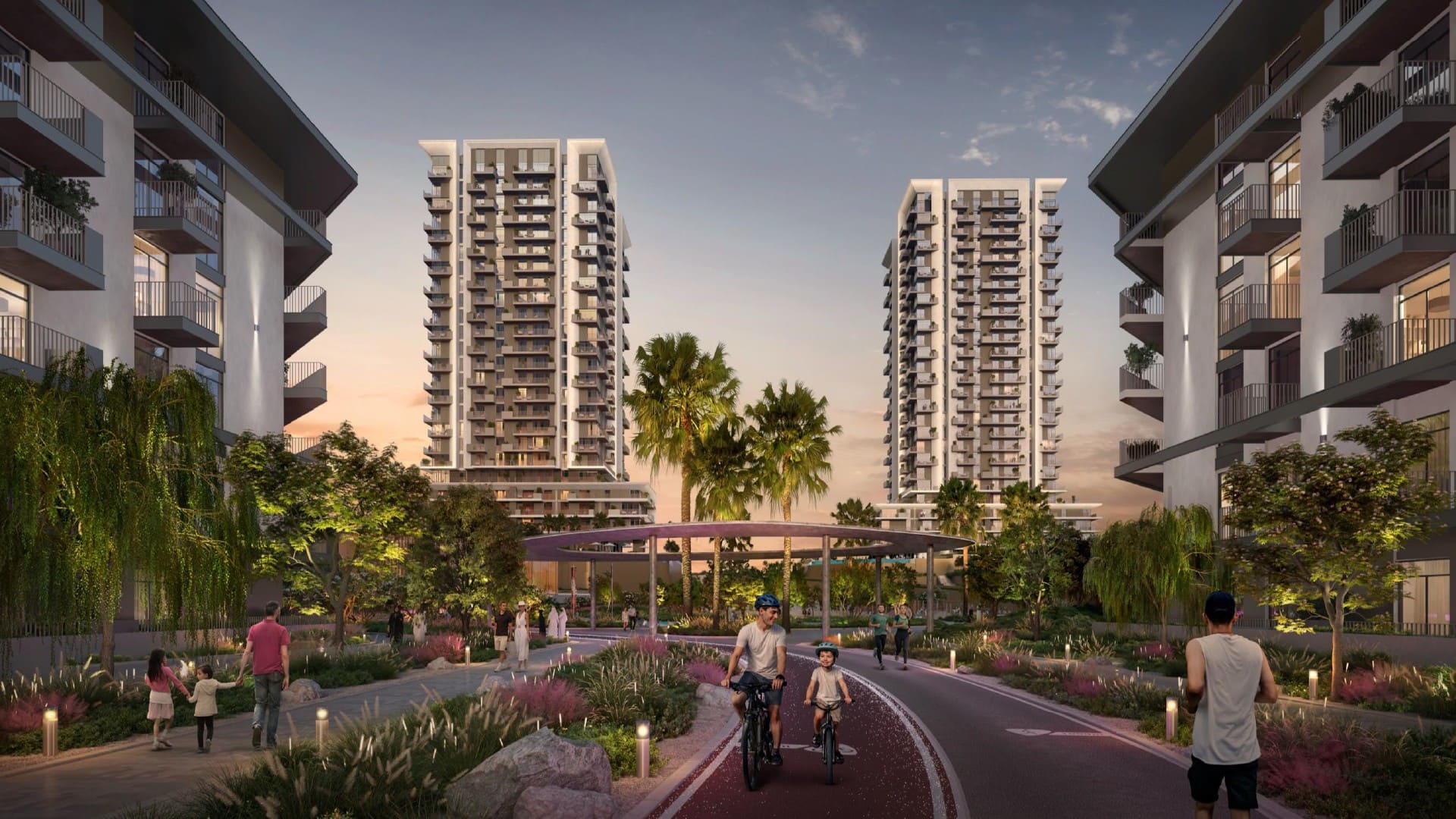
All of these systems support Dubai’s 2040 Urban Master Plan, which focuses on walkable, human-centric neighborhoods.
The vision:
-
Everything within 15 minutes
-
Homes, offices, schools, shops close together
-
Reduced dependence on cars
This isn’t just transport planning.
It’s a lifestyle upgrade — healthier, quieter, and more connected.
A City Designed Around Movement, Not Cars
Dubai isn’t removing cars overnight.
It’s doing something smarter.
By layering metro systems, trams, national rail, aerial mobility, and walkable communities, the city is creating choice — letting people move efficiently without being forced into traffic.
This is what future cities look like.
Final Thought
Dubai is not building one transport solution.
It’s building an ecosystem.
A city where movement is:
-
Seamless
-
Multi-modal
-
Sustainable
-
Human-first
And the most important shift?
You don’t need a car to live well.