

Dubai Real Estate Sales Surpass AED 2 Trillion in Just 5 Years
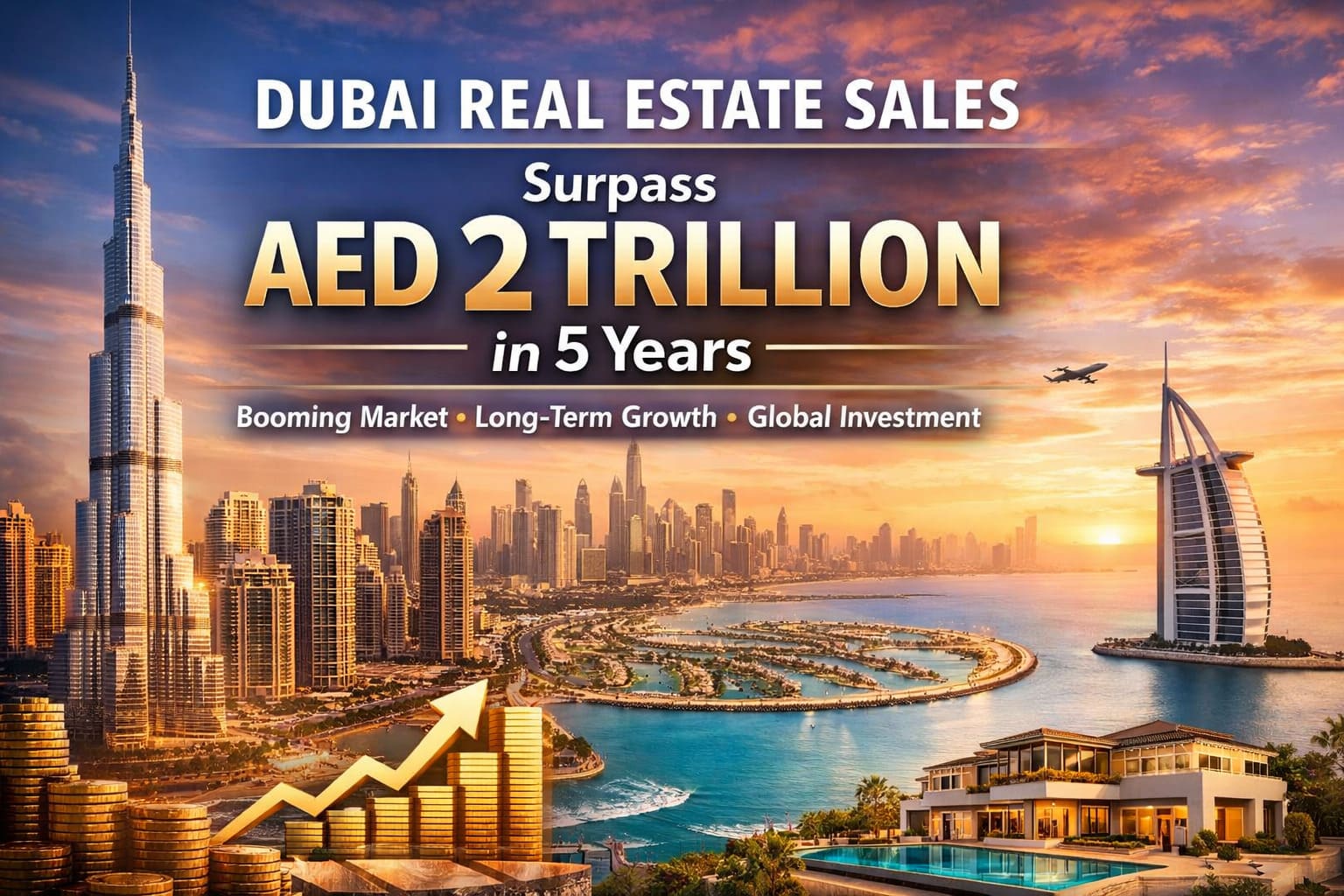
Dubai’s real estate market has crossed a historic milestone, recording over AED 2 trillion in cumulative property sales within five years. This remarkable growth is not driven by short-term speculation, but by strong economic fundamentals, global investor confidence, and a regulated, transparent property ecosystem.
As the market enters 2026, momentum remains strong — positioning Dubai as one of the world’s most resilient and attractive real estate investment destinations.
Dubai Property Market Overview
Over the past five years, Dubai’s property sector has transformed into a high-performance, globally competitive market.
Key drivers behind this growth include:
-
Strong regulatory frameworks that protect investors
-
Government-backed economic diversification
-
Growing population and international migration
-
Long-term residency programs tied to property ownership
-
Infrastructure-led master planning
With AED 2 trillion+ in cumulative sales, Dubai’s real estate market has proven its ability to scale while maintaining stability.
Annual Sales Performance: A Five-Year Breakdown
Dubai’s real estate sales volumes show a clear, consistent upward trajectory:
-
2021: AED 149 billion
-
2022: AED 265.5 billion
-
2023: AED 401 billion
-
2024: AED 522.36 billion
-
2025 (estimated): AED 682.6 billion
This represents nearly 5× growth since 2021, highlighting a sustained expansion rather than a temporary cycle.
Transactions & Pricing at Record Highs
Market activity has reached historic levels across both residential and luxury segments:
-
214,900 transactions in 2025
-
38% year-on-year transaction growth
-
Property prices up 19.8% as of December 2025
-
Strong demand for apartments, villas, branded residences, and waterfront assets
This level of liquidity signals a healthy balance between end-users and investors — a key indicator of market maturity.
What This Means for Investors
Dubai’s real estate growth sends a clear signal:
-
This is structural expansion, not speculation
-
Demand is supported by real occupancy, business relocation, and wealth migration
-
The market is transitioning into a mature, sustainable phase
-
Focus is shifting toward smart developments, lifestyle communities, and long-term value assets
For investors, this environment favors strategic positioning, quality projects, and long-term holding rather than short-term flipping.
Conclusion
Crossing AED 2 trillion in five years is not just a milestone — it reflects Dubai’s evolution into a globally trusted real estate hub. With continued population growth, infrastructure investment, and investor-friendly policies, the outlook moving into 2026 remains firmly positive.
Dubai is no longer an emerging market story — it is a global real estate powerhouse.