

Smart Capital Moves in UAE Real Estate: Where Not to Invest in 2026 — and Where to Position Instead
Real estate cycles don’t reward emotion — they reward timing and positioning.
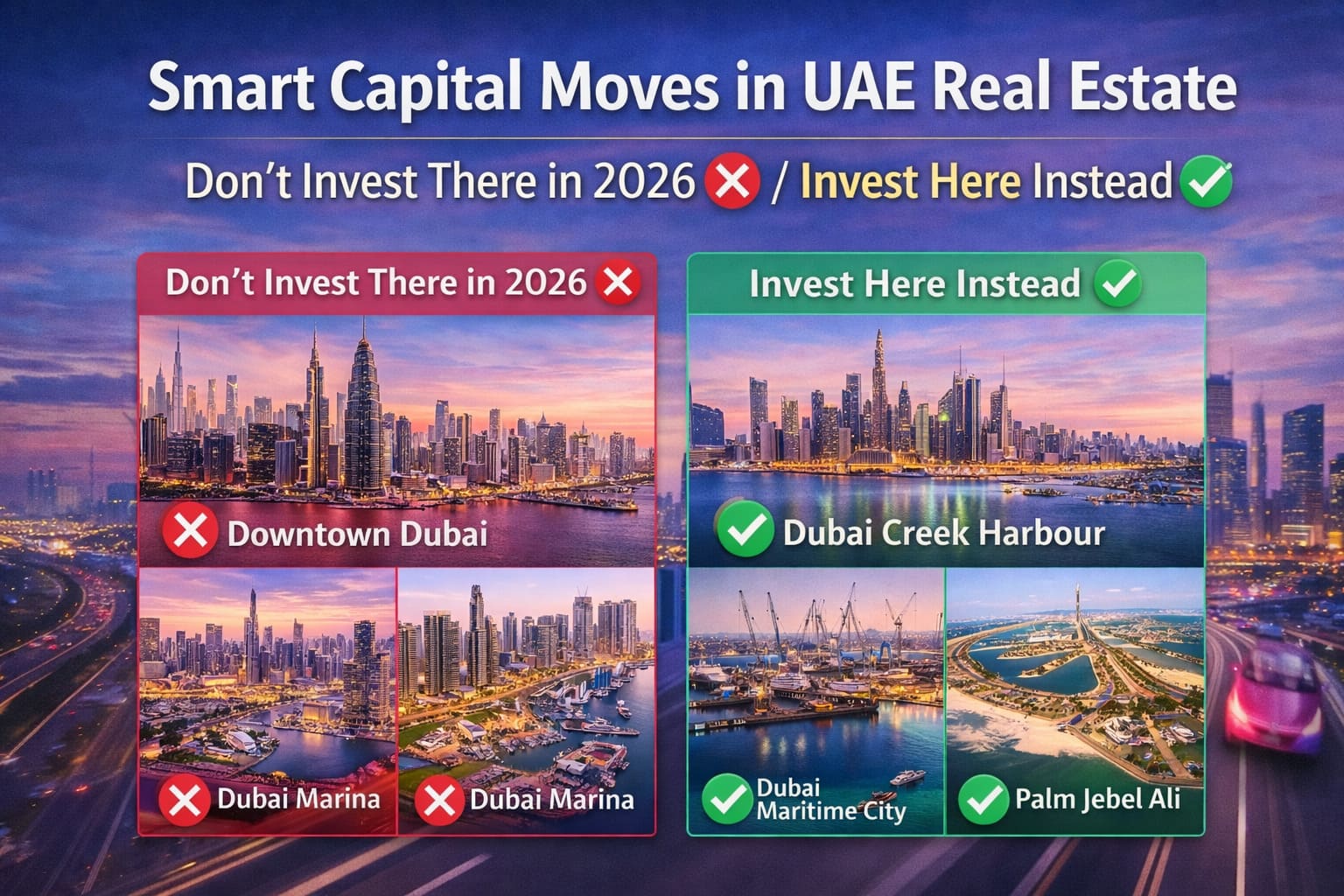
In 2026, many of Dubai’s most famous areas are no longer value plays. Prices may be high, but upside is compressed. Meanwhile, capital is quietly rotating into emerging districts with structural growth drivers.
Below is a capital-first comparison of where to avoid and where to invest instead.
Downtown Dubai vs Dubai Creek Harbour
❌ Downtown Dubai
Downtown has reached peak maturity. Pricing is elevated, supply is tight, and rental yields face compression as entry costs climb faster than rents.
✅ Dubai Creek Harbour
Still early in its growth cycle, Dubai Creek Harbour benefits from:
-
Landmark-led development
-
Waterfront positioning
-
Long-term master planning
This creates stronger appreciation potential over the next cycle.
Dubai Marina vs Dubai Maritime City
❌ Dubai Marina
Aging building stock and prolonged oversupply have limited rental growth. While liquidity remains, upside is constrained.
✅ Dubai Maritime City
With limited waterfront supply and a central coastal location, Dubai Maritime City offers:
-
Higher liquidity
-
Strong rental demand
-
Scarcity-driven pricing support
Palm Jumeirah vs Palm Jebel Ali
❌ Palm Jumeirah
Palm Jumeirah is a success — but a mature one. Entry prices are near peak, and future growth is incremental rather than exponential.
✅ Palm Jebel Ali
Palm Jebel Ali is built for multi-cycle appreciation:
-
Ultra-low density
-
Long-term phased development
-
Government-backed coastal strategy
This is positioning for 10–20 years, not short-term flips.
Business Bay vs Dubai Design District (D3)
❌ Business Bay
Oversupply and inconsistent tenant demand create pricing pressure and unpredictable yields.
✅ Dubai Design District (D3)
D3 is lifestyle-driven and demand-led:
-
Creative industries
-
Corporate headquarters
-
High-quality residential and commercial mix
This results in better tenant quality and pricing resilience.
JVC vs Dubai South
❌ JVC
Late-cycle saturation and dense supply reduce growth velocity.
✅ Dubai South
Dubai South is driven by:
-
Al Maktoum International Airport
-
Aviation, logistics, and employment growth
-
Long-term population inflow
This is economic-driven demand, not speculation.
Secondary Ready Villas vs Ghantoot – The Diamond Belt
❌ Secondary Ready Villas
High maintenance, peak pricing, and limited upside reduce long-term return efficiency.
✅ Ghantoot – The Diamond Belt
A government-planned ultra-luxury corridor positioned between Abu Dhabi and Dubai:
-
Scarcity-led
-
Institutional-grade planning
-
Long-term capital preservation and appreciation
Generic Ready Offices vs DIFC Fringe Zones
❌ Generic Ready Offices
Oversupply and weak absorption limit rental stability.
✅ DIFC Fringe Zones
Spillover demand from DIFC drives:
-
Premium tenants
-
Higher rental yields
-
Stronger exit liquidity
Final Thought
Smart investors don’t chase what already performed.
They position before the next cycle begins.
The difference between average and elite returns is not location —
it’s timing, data, and discipline.