


Dubai Property Handover Process: A Step-by-Step Guide for Off-Plan Buyer
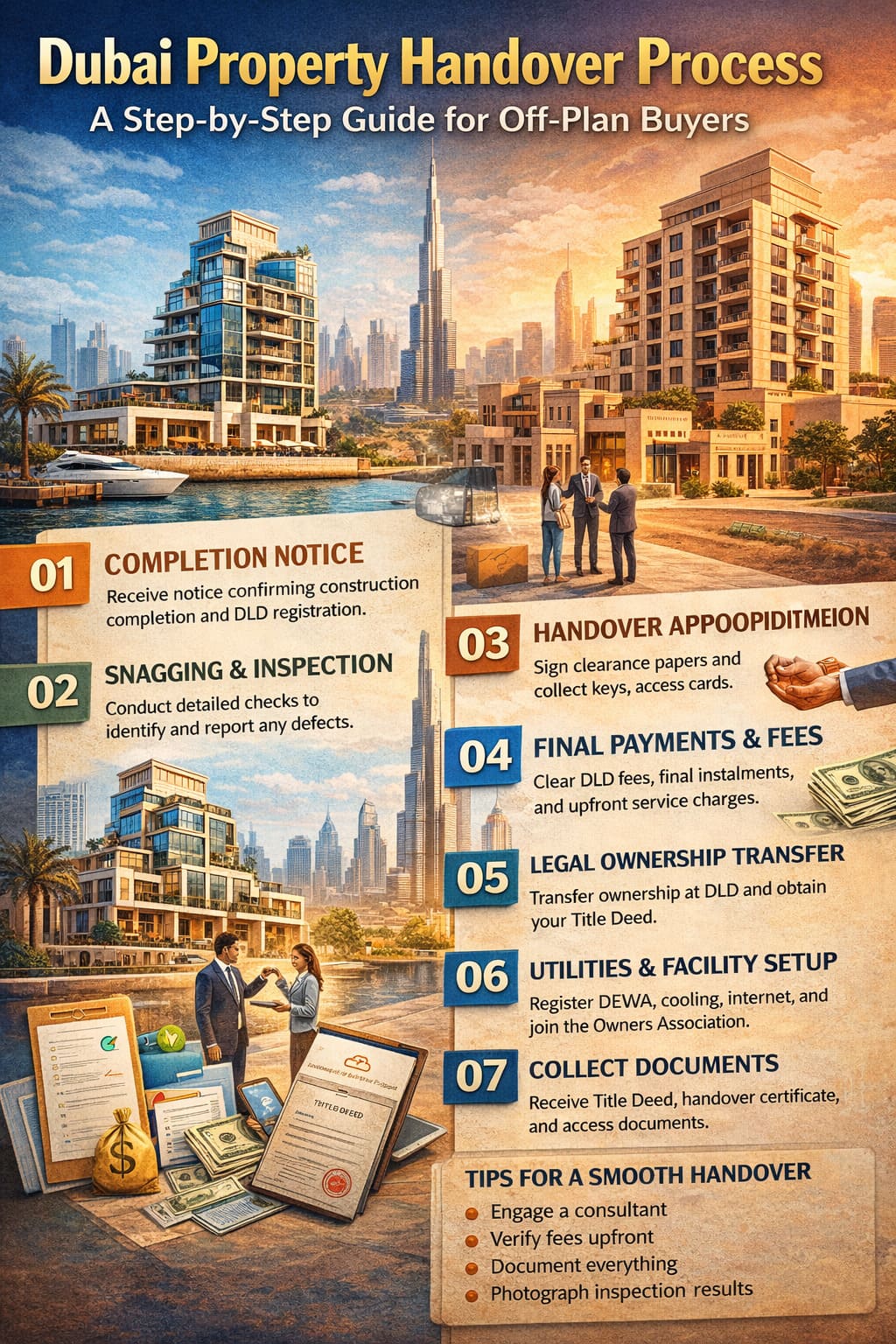
Purchasing an off-plan property in Dubai is a major milestone, but signing the Sales and Purchase Agreement (SPA) is only the beginning. The real journey reaches its most important phase at property handover—the stage where legal ownership transfers from the developer to the buyer and the property becomes ready for occupation, leasing, or investment use.
Dubai’s property handover process is structured, transparent, and regulated by the Dubai Land Department (DLD). Understanding each step helps buyers avoid delays, unexpected costs, and legal complications. This guide explains the entire process step by step to ensure a smooth and confident transition into ownership.
Step 1: Completion Notice from the Developer
The property handover journey officially begins when the developer issues a Completion Notice. This document confirms that:
-
Construction of the project is completed
-
The unit is registered with the Dubai Land Department
-
All necessary approvals have been obtained
The completion notice also includes your Property Index Number (PIN), which is required for DEWA, Ejari, and utility registrations.
Why This Step Is Important
The completion notice authorizes buyers to proceed with snagging, inspections, and ownership transfer preparations.
Step 2: Snagging and Property Inspection
Once the completion notice is issued, buyers should conduct a snagging inspection—a detailed quality check before accepting the unit.
What to Inspect
-
Flooring and tiles
-
Doors, windows, and locks
-
Paintwork and wall finishes
-
Plumbing and sanitary fittings
-
Electrical systems and HVAC
Many buyers hire professional snagging companies, especially overseas investors or first-time buyers, to ensure all defects are identified.
Important Tip
Do not sign the handover certificate until all defects are recorded and the developer commits in writing to fixing them.
Step 3: Handover Appointment with the Developer
After snagging issues are addressed, the developer schedules a handover appointment, marking the physical and legal transition of the property.
What Happens During the Appointment
-
Signing of handover certificates and clearance documents
-
Collection of keys, access cards, and parking permits
-
Receipt of appliance manuals and warranty documents
This appointment confirms that the property is ready for possession and meets contractual requirements.
Step 4: Final Payments and Mandatory Fees
Before ownership transfer, all financial obligations must be cleared.
1. Dubai Land Department (DLD) Registration Fee
-
4% of the property value (mandatory)
2. Title Deed Issuance Fee
-
Approximately AED 580
-
Additional knowledge and innovation charges may apply
3. Final Property Installments
-
Typically 5–10% of the total purchase price, as per SPA
4. Service Charges
-
Paid upfront and calculated per square foot
-
Covers maintenance of common areas and facilities
5. Utilities & DEWA Deposits
-
Apartments: approx. AED 2,000
-
Villas: approx. AED 4,000
-
Connection and activation fees may apply
Step 5: Legal Ownership Transfer at Dubai Land Department
Once all payments and documents are submitted, the DLD officially transfers ownership to the buyer.
Required Documents
-
Emirates ID or passport (or Power of Attorney)
-
Original Sales and Purchase Agreement (SPA)
-
Payment receipts
-
Developer’s No Objection Certificate (NOC)
The Title Deed is issued electronically via email, with physical copies available upon request.
Step 6: Utilities and Facility Registration
After receiving the keys, buyers must activate essential services.
DEWA Registration
-
Register using your Property Index Number, Emirates ID, and Title Deed or Oqood
-
Available via DEWA app or online portal
District Cooling
-
Providers such as Empower or Emicool register the unit separately
Internet & TV
-
Du or Etisalat connections are activated once the unit is cleared
Owners Association Registration
-
Required to access community amenities and services
Step 7: Documents to Collect at Handover
Buyers should ensure they receive and safely store the following:
-
Title Deed or confirmation of issuance
-
Handover certificate
-
Access cards and parking permits
-
Appliance warranties and manuals
-
Completion certificate
These documents are essential for resale, leasing, refinancing, and community registration.
Common Handover Issues and How to Avoid Them
Incomplete Snagging Repairs
Never sign handover documents without written confirmation of pending repairs.
Title Deed Delays
Maintain communication with the developer and DLD and keep payment records.
Unexpected Service Charges
Request a full breakdown of charges before the handover appointment.
Utility Activation Delays
Initiate DEWA and cooling registrations early to avoid move-in delays.
Practical Tips for a Smooth Property Handover
-
Engage a legal or property consultant, especially for overseas buyers
-
Request a complete fee schedule upfront
-
Keep all communication documented via email
-
Take photographs during inspections as evidence
Conclusion
Property handover in Dubai is a detailed and highly regulated process that transforms your off-plan investment into a tangible, income-ready asset. From receiving the completion notice to activating utilities and securing legal ownership, each step requires attention, preparation, and documentation.
By understanding the handover process, anticipating costs, and maintaining organized records, buyers can enjoy a seamless transition into homeownership or rental readiness. Whether you are a first-time buyer or a seasoned investor, clarity and preparation ensure your Dubai property journey ends on a confident and successful note.