

Oldest Buildings in Dubai: Timeless Treasures That Shaped the City
Dubai is globally celebrated for its futuristic skyline, luxury lifestyle, and rapid urban growth. Yet behind the glass towers and bustling highways lies a quieter, deeply fascinating story — one rooted in heritage, resilience, and architectural ingenuity.
Scattered across the city are historic buildings that witnessed Dubai’s transformation from a modest trading port to a global metropolis. These structures are more than relics; they are living records of the city’s social, cultural, and economic evolution. Exploring the oldest buildings in Dubai offers residents and visitors a rare opportunity to connect with the emirate’s origins and understand how tradition laid the foundation for modern ambition.
Below is a curated guide to Dubai’s most important historic landmarks, each representing a milestone in the city’s journey.
1. Al Fahidi Fort (1787) – Dubai’s Oldest Standing Structure
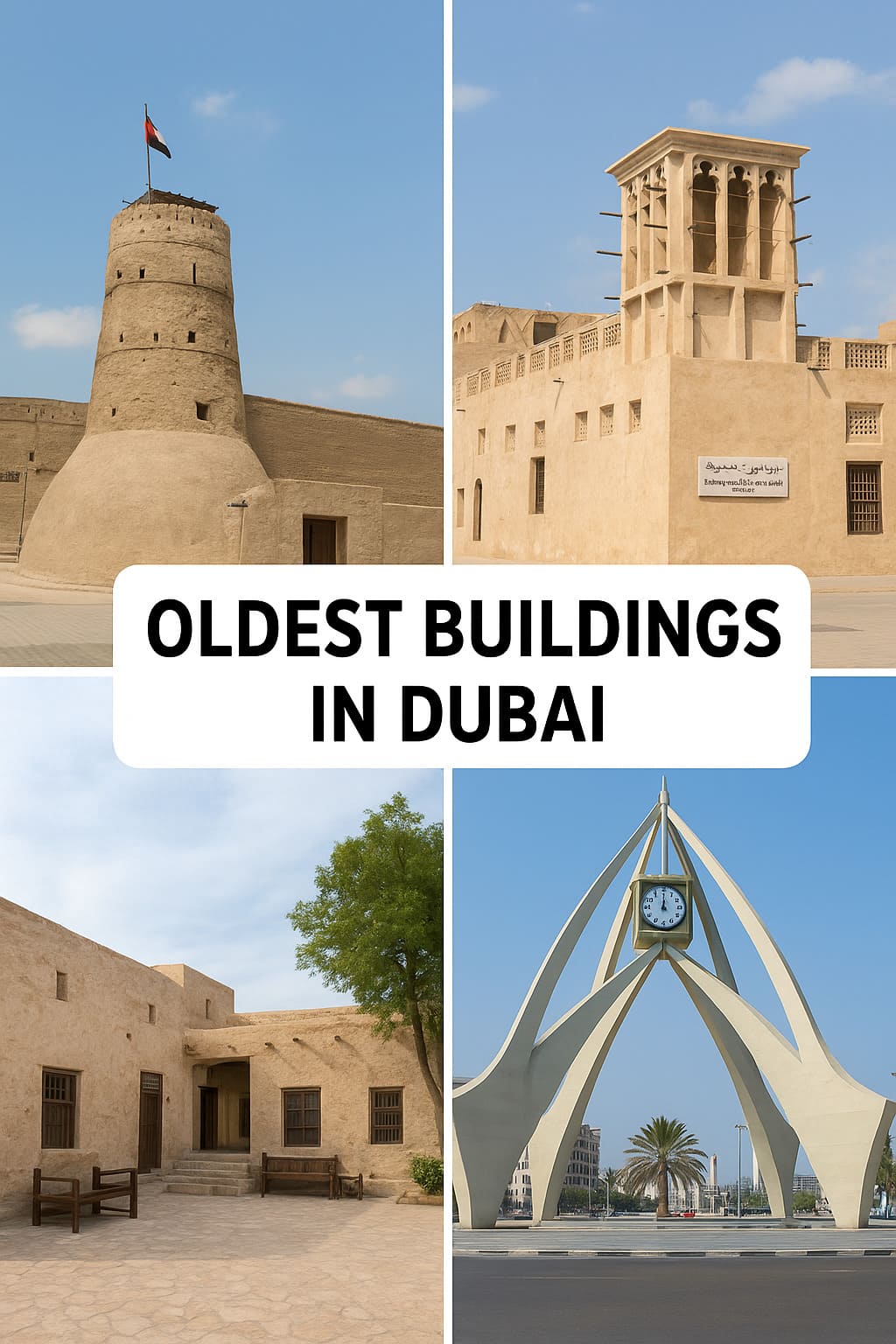
Built in 1787, Al Fahidi Fort is the oldest surviving building in Dubai. Originally constructed using coral stone, gypsum, and palm wood, the fort served multiple purposes over the centuries — including a defensive stronghold, royal residence, prison, and administrative center.
Today, it houses the Dubai Museum, offering immersive exhibits that showcase traditional Emirati life, ancient weapons, archaeological artefacts, and recreated village scenes.
Key Highlights
-
Oldest building in Dubai (1787)
-
Served as fort, prison, and government headquarters
-
Coral-stone walls and watchtowers
-
Now home to the Dubai Museum
2. Sheikh Saeed Al Maktoum House (1896) – Royal Heritage by the Creek
Constructed in 1896, this residence belonged to Sheikh Saeed Al Maktoum, the grandfather of Dubai’s current ruler. Located along Dubai Creek, the house reflects classic Emirati architecture with wind towers (barjeel), courtyards, teak doors, and gypsum walls.
The building now functions as a museum showcasing historic photographs, manuscripts, and maps that document Dubai’s political leadership, maritime trade, and early governance.
Key Highlights
-
Built in 1896 as a royal residence
-
Traditional courtyards and wind towers
-
Historical documents and early photographs
-
Insight into Dubai’s ruling family and trade heritage
3. Heritage House (1890) – A Glimpse into Everyday Emirati Life
Dating back to the 1890s, Heritage House represents a traditional Emirati family home. Built from coral, gypsum, and palm fronds, its design focuses on privacy, family living, and climate adaptation.
Inside, visitors can explore preserved furniture, household tools, and daily-use items that illustrate how ordinary families lived, cooked, and socialized in early Dubai.
Key Highlights
-
Traditional Emirati home from the 1890s
-
Central courtyard and family-focused layout
-
Original furniture and household artefacts
-
Insight into daily life of early Dubai residents
4. Al Ahmadiya School (1912) – Dubai’s First Formal School
Established in 1912, Al Ahmadiya School was Dubai’s first formal educational institution. It marked a turning point in structured learning, focusing on reading, writing, and Islamic studies.
The preserved classrooms feature wooden desks, blackboards, and chalk trays, highlighting the simplicity and discipline of early education. Wind towers provided natural ventilation long before modern air conditioning.
Key Highlights
-
First formal school in Dubai (1912)
-
Traditional wind-tower ventilation
-
Preserved original classrooms
-
Symbol of early educational development
5. Bayt Al Wakeel (1935) – Early Commercial Headquarters
Built in 1935, Bayt Al Wakeel served as a merchant’s residence and office near Dubai Creek. Its strategic location made it a vital center for managing maritime trade and coordinating with traders arriving by dhow.
The building features coral stone walls, wooden interiors, and wind towers — a blend of residential and commercial architecture typical of Dubai’s trading era.
Key Highlights
-
Built in 1935 as a merchant office
-
Prime location along Dubai Creek
-
Key role in early trade and commerce
-
Recognized cultural heritage site
6. Deira Clock Tower (1965) – A Symbol of Modern Transition
Constructed in 1965, the Deira Clock Tower marks Dubai’s transition from a traditional trading hub to a modern city. Positioned at a major traffic intersection, the circular design quickly became a recognizable landmark.
Though modest by today’s standards, it symbolized urban planning, modernization, and the emirate’s growing ambitions during the mid-20th century.
Key Highlights
-
Built in 1965
-
One of Dubai’s first modern landmarks
-
Represents early urban development
-
Icon of mid-20th century modernization
7. Toyota Building (1974) – Rise of Global Commerce
The Toyota Building, completed in 1974, reflects Dubai’s commercial boom during the oil era. It was among the first buildings designed specifically for international corporate offices.
With its concrete structure, large windows, and modernist style, it represented a shift toward global business architecture and economic diversification.
Key Highlights
-
Built in the 1970s
-
Early modern commercial architecture
-
Symbol of international business expansion
-
Reflects Dubai’s oil-era economic growth
8. Dubai World Trade Centre (1979) – The First Skyscraper
Completed in 1979, the Dubai World Trade Centre (DWTC) was the city’s first skyscraper, standing 39 storeys tall. At the time, it dramatically redefined Dubai’s skyline and future ambitions.
Today, DWTC remains a central hub for global exhibitions, conferences, and trade shows — continuing its legacy as a catalyst for economic growth.
Key Highlights
-
Dubai’s first skyscraper (1979)
-
39-storey modern tower
-
Global exhibitions and business events
-
Turning point in Dubai’s skyline evolution
Why These Buildings Matter
Dubai’s historic buildings are more than architectural landmarks — they are bridges between generations. From forts and royal homes to schools and commercial hubs, each structure tells a story of resilience, innovation, and cultural identity.
Preserving these sites ensures that Dubai’s origins are not overshadowed by rapid modernization. Visiting them offers a deeper appreciation of how the city evolved from a small trading settlement into a world-class metropolis.
Final Thoughts
The oldest buildings in Dubai remind us that progress is built on heritage. While the city continues to push boundaries in architecture and innovation, these timeless structures ensure its roots remain firmly grounded in history, culture, and community values.